

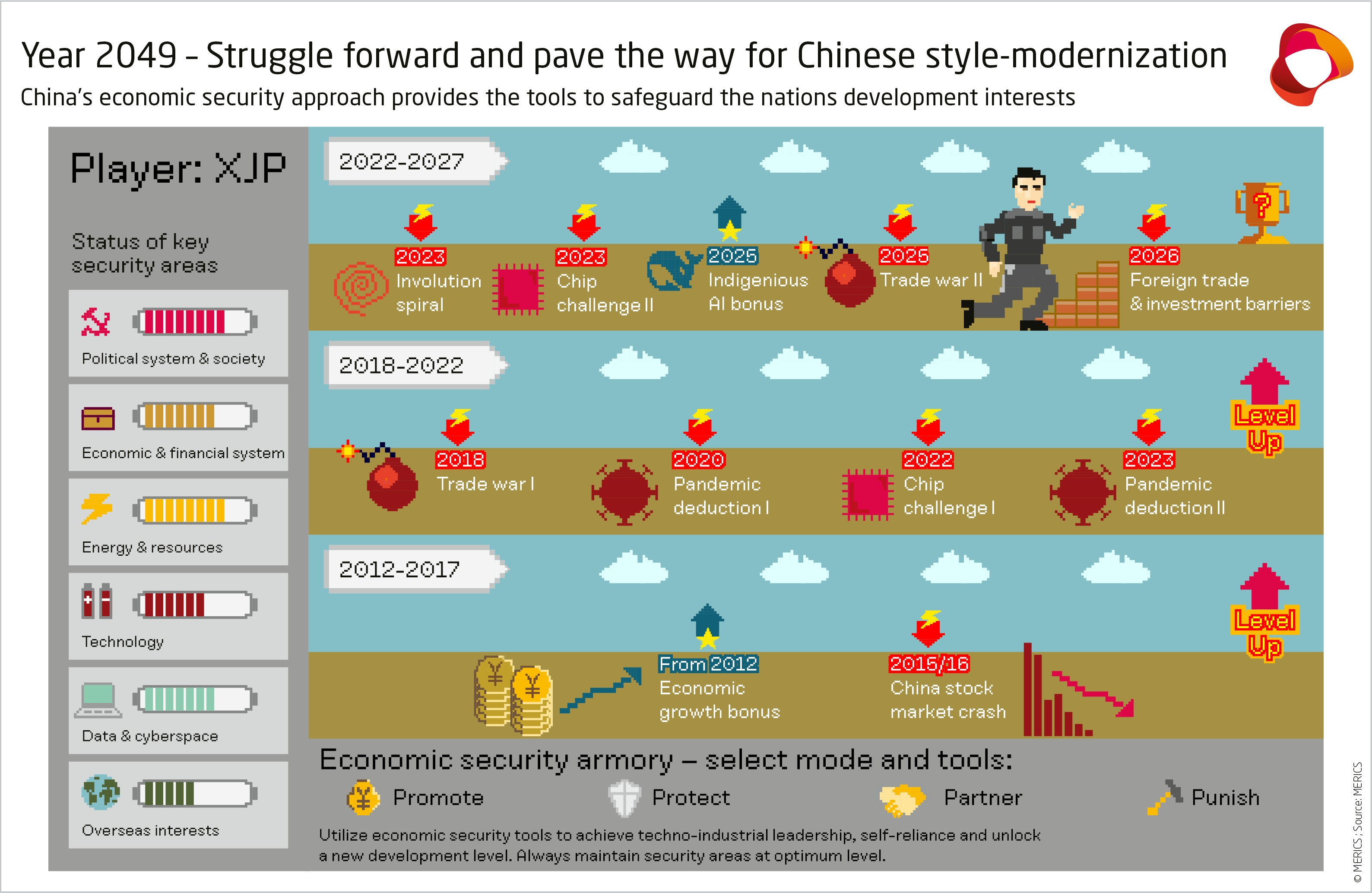
In a nutshell, China's Belt and Road Initiative is how it works its way into power in the countries it helps. They promise to build out the infrastructure, and they do. That's good for the countries. But the end result was the countries going into debt, significant debt from the loan sharks (CCP). So how do they reconcile the debt? Provide more access, control and ownership to China, especially ports, railways and other important infrastructure for use in the future.
Trump was having no such thing, and he stopped China from taking over the Panama Canal, which was not too far in the future. China actually had a city at a port on the canal where the Chinese lived, which was basically a Chinatown with all the fixings. Without Trump, China would own the Panama Canal.
This article is a great read to give you an idea of all the efforts China is planning and to reinforce that we cannot trust China. How do I know that? By the doctrine coming out of China, they are not hiding where they are headed. We just need to pay attention. All IMO.
“In mid-2026, Beijing issued a slew of new regulations designed to counter foreign sanctions and restrictions, deter foreign governments and companies from derisking and due diligence efforts, and prevent unwanted outflows of technology, know-how, and talent (see exhibit 1).1 Further steps to block and counter financial sanctions were set in motion.2
The measures are part of China’s growing armory for defending its economic security interests and offer a host of new options for targeting and punishing foreign counterparts. They allow for broad interpretation while also permitting selective compliance with other jurisdictions. This gives China’s authorities substantial wiggle room in applying measures, ranging from managed cooperation to escalation.
The new regulations reflect a deeper shift in how China’s leadership defines and pursues its economic security interests. Over the past years, Beijing has leveraged dependencies on the PRC for processed rare earth elements (REEs) and other critical raw materials (CRMs) to assert its interests across numerous global supply and value chains. This tough show of economic power was at full display in the US-China trade row.
However, China’s coercive economic statecraft is increasingly hitting Europe, too – a trend that may accelerate as Beijing views existing and possible new EU measures as a compounded threat to its interests. These include, for example, the draft Industrial Accelerator Act, the proposal for a revised Cybersecurity Act, the Foreign Subsidies Regulation, public procurement instruments and a new forced labor ban.3
This new stage in the PRC’s quest for economic and national security brings unprecedented risks for international stakeholders. Beijing has embraced an extraordinarily expansive national security doctrine under Chinese Communist Party (CCP) and state leader Xi Jinping. The party has reestablished leadership over the economy and pursues an ambitious industrial and innovation policy to achieve self-reliance and leadership across domains.
The 15th Five-Year Plan (2026-2030, FYP) further reinforces China’s economic security strategy: it seeks short- to medium-term resilience against trade and technology wars and economic and technological dominance in the long run.4 Maintaining and even increasing foreign dependencies on China while preventing the loss of China’s own competitive edge fit this logic.
As the PRC’s pursuit of technological dominance conflicts with other nations’ efforts to protect their markets and industrial bases, friction is growing. China’s leadership is preparing to strike back against restrictions and containment efforts. The growing list of foreign-facing rules is designed for hands-on application. Recent cases involving companies like Nuctech, Nexperia and Manus AI show how swiftly they can be wielded.5
To navigate the path forward, policymakers, business leaders and other stakeholders in Europe and elsewhere need to understand the scale, political reasoning and distinctive aspects of China’s economic security approach, as well as how it might be implemented. Companies, in particular, are being squeezed between conflicting security regimes and should pay close attention to the shifting political and regulatory environment.”