

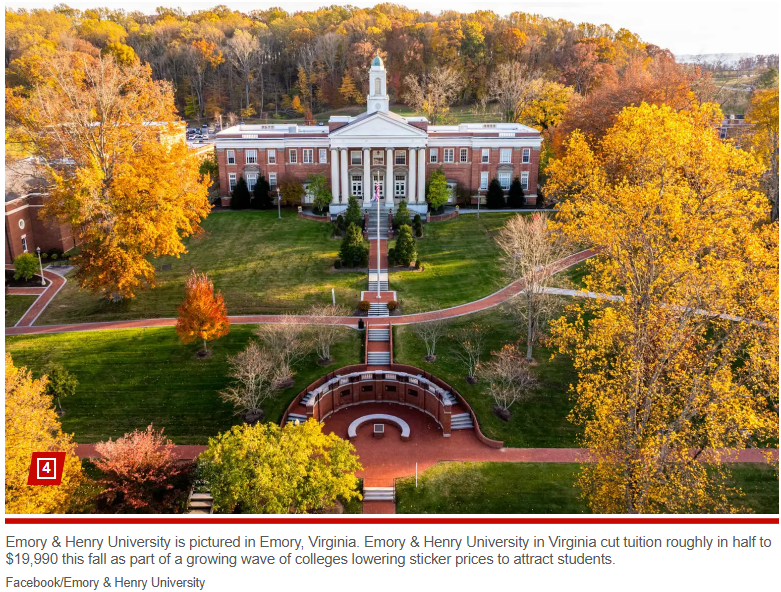
I’ve never understood how people with liberal arts degrees think they can graduate and make hundreds of thousands a year. I’m all in on these degrees, but we need to address expectations for post-college life. Companies aren’t hiring artists, musicians, and others with general degrees at salaries that pay off the school loans.
Blue-collar work is in demand, and you can get trained and paid while learning to be an electrician, carpenter or in other trades. The pay is outperforming all the liberal arts-degreed students who paid outrageous prices to keep professors fat and comfortable. People are awakening to the liberals who have attacked our way of living for decades. That is hopefully coming to an end because the liberals have allowed our K-12 schools to graduate kids who can’t read or write but want to go to college. All IMO.
“The University of Tulsa plans to cut undergraduate tuition and university fees from $54,000 to $25,000 in fall 2027 — a $29,000, or 53.7%, reduction.
Coe College in Iowa will drop tuition from $58,780 to $31,850 for 2027-28, while Montana’s Carroll College will cut tuition and general undergraduate fees from $44,712 to $26,800.
Concordia University, St. Paul in Minnesota will cut tuition by $5,500 to $21,700 for on-campus undergraduates beginning in fall 2027.
The trend, first reported by Bloomberg, is challenging a private-college pricing model in which schools post daunting tuition rates, then heavily discount them with merit scholarships and institutional grants.
The average institutional discount rate for first-time undergraduates at participating private colleges reached 57.1% in the 2025-26 academic year.
Nick Standlea, founder of High School Reach, which helps families compare college costs and financial-aid offers, told The Post that the tuition resets reflect a shift away from the high-price, high-aid model.
That means many students already pay far less than sticker price — and some colleges are shrinking scholarships as they lower tuition.
“The high sticker price existed partly to make large scholarships feel valuable,” Standlea said.
“But as consumer sentiment shifts to being more price-conscious for college, this strategy of high sticker price [and] generous aid might no longer be viable.”
Indeed, just three in 10 Americans said in a new Gallup poll that they believe post-high-school education is “very important.”